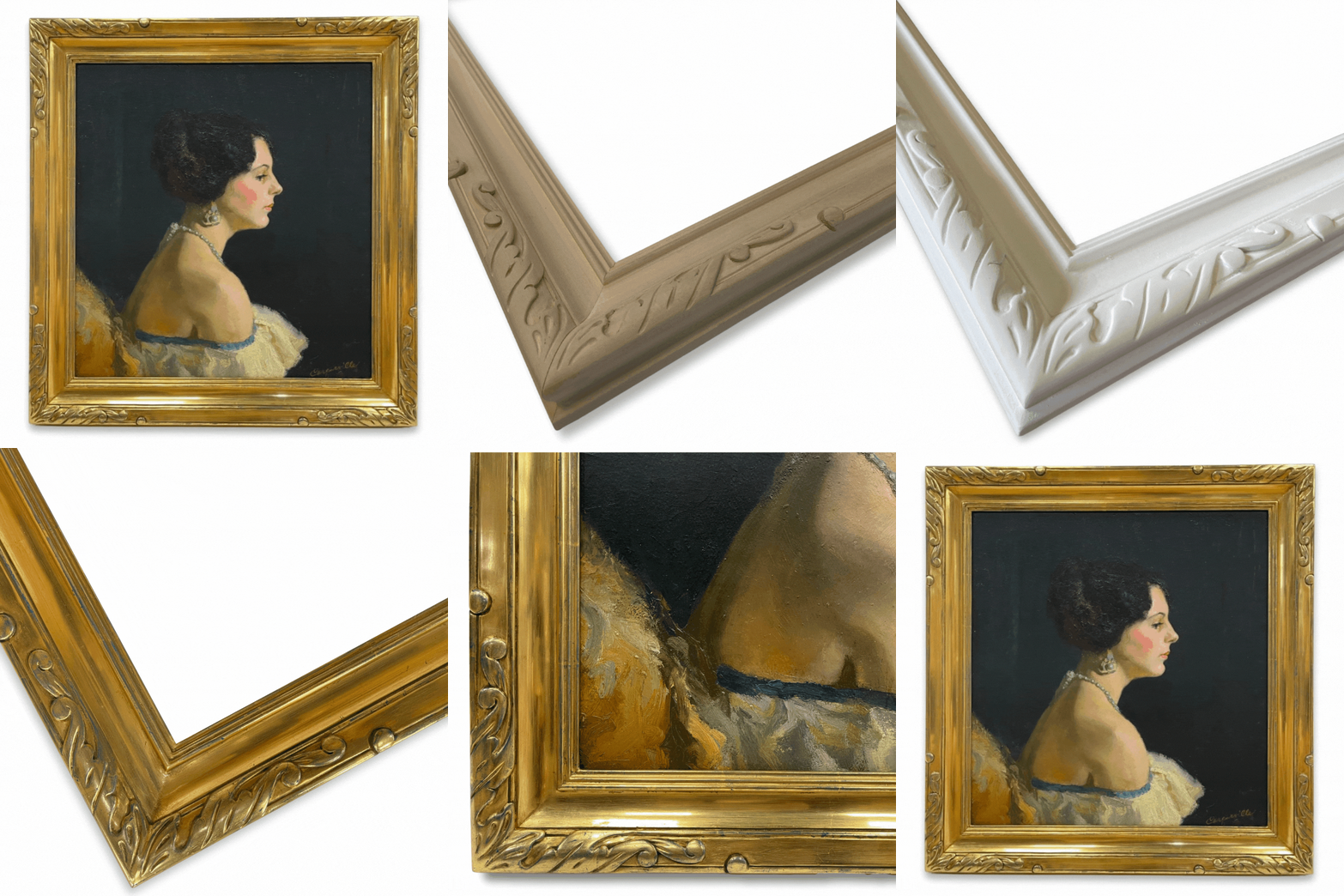
The creation of a custom gilded frame for an heirloom portrait
A Portrait by William Carqueville
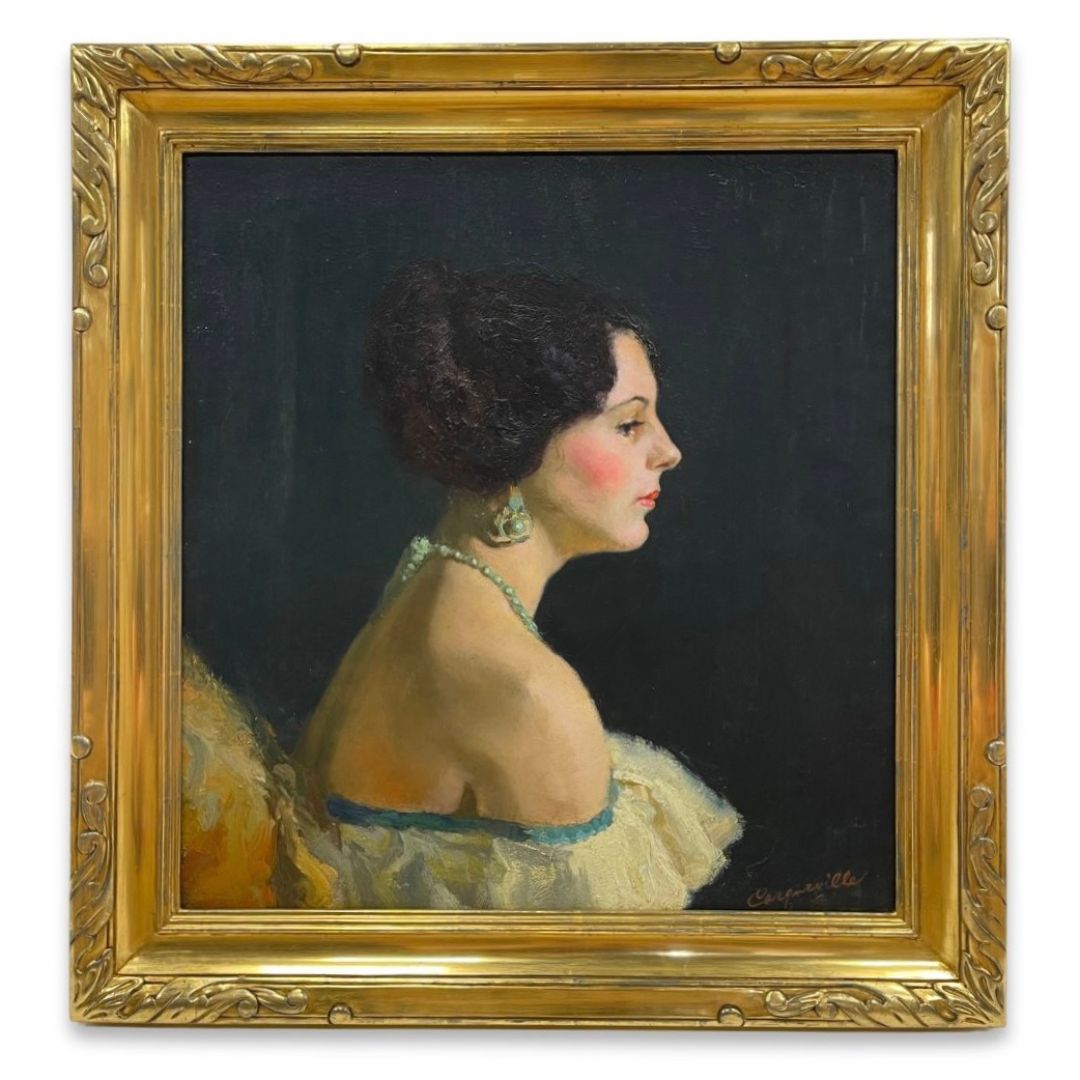
This beautiful portrait from the early 1930s was painted by Chicago artist, William Carqueville (1871-1946). He studied at the Art Institute of Chicago and briefly in Paris. While he is known for his realistic paintings, he is most recognized for his lithographic illustrations. His work was published in literary magazines such as Lippencotts, International, Harper’s, Scribner’s, etc.
This portrait of an anonymous sitter. The painting is oil on board and is signed at the lower right corner. The contrast of the blue background highlights the sitter’s beautiful complexion.
The Making of the Frame
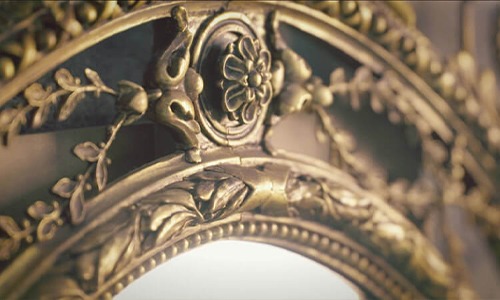
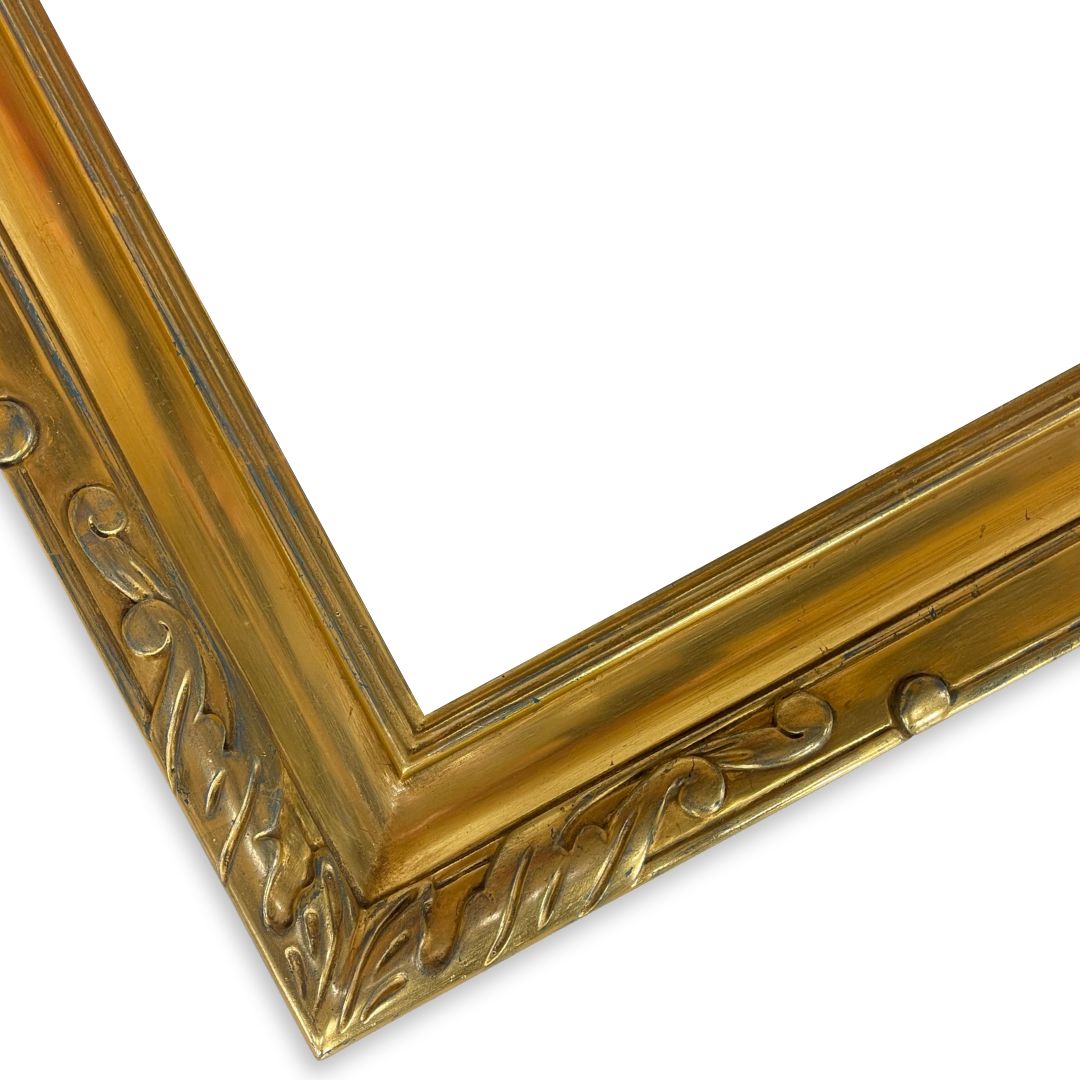
We wanted to design a frame that not only complimented the painting, but also wanted it to look like it was made at the same time as the portrait. The portrait commanded an elegant frame, but, nothing too ornate. We opted for an American Impressionist frame design that honored the time period. The hand carved design on the corners added just enough detail, without overpowering the painting.
It Starts with a Raw Wood Profile
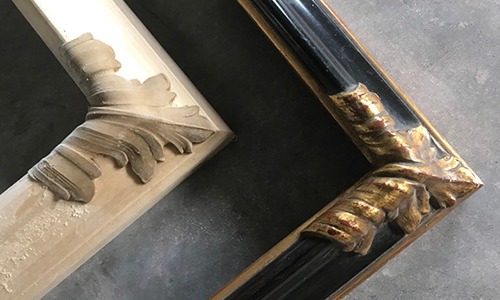
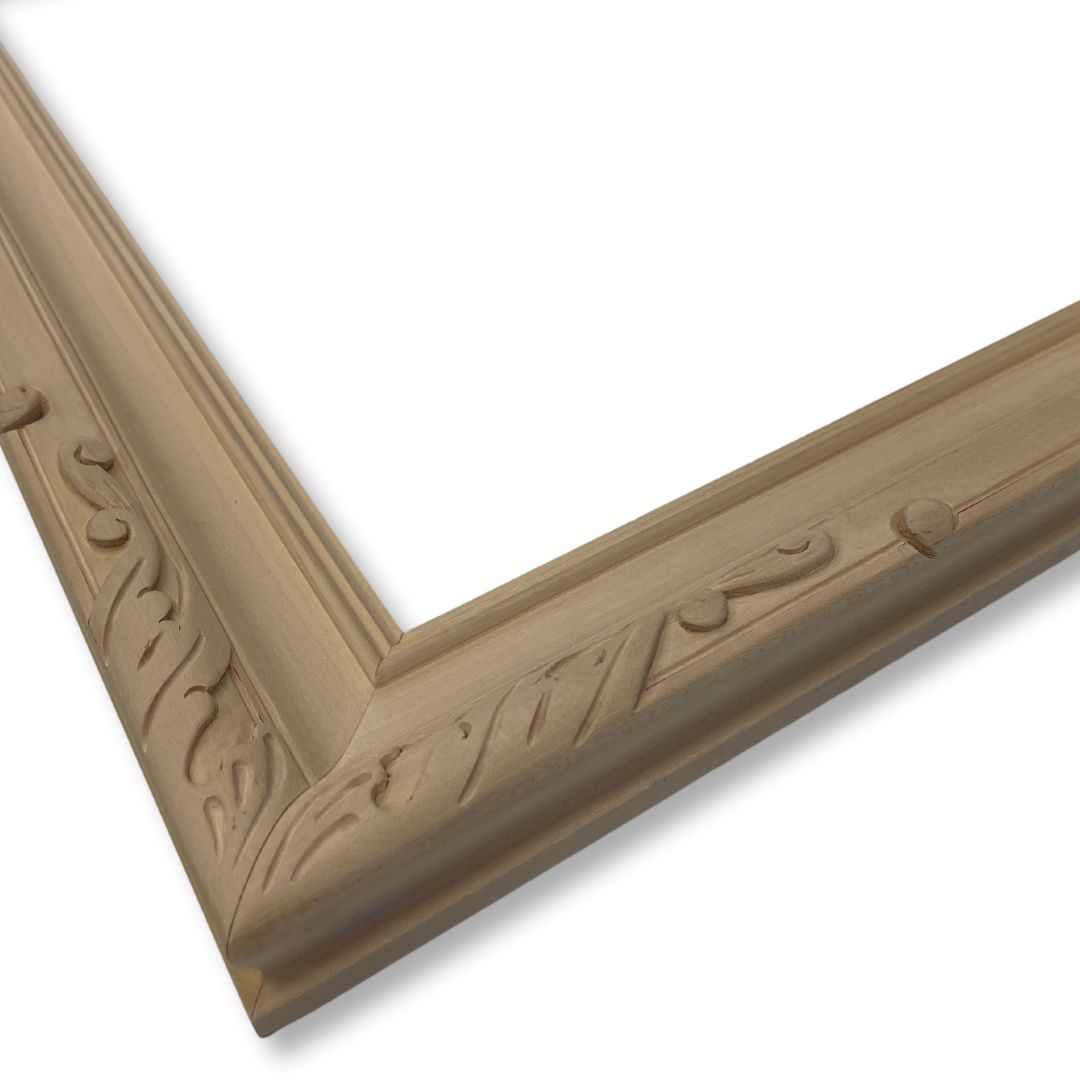
The raw wood profile was milled, cut into four custom lengths, and then joined at our studio. Once joined, the design was scaled and hand drawn in graphite at each corner. The design was then carved by hand. The profile was sanded smooth to prepare for the next step.
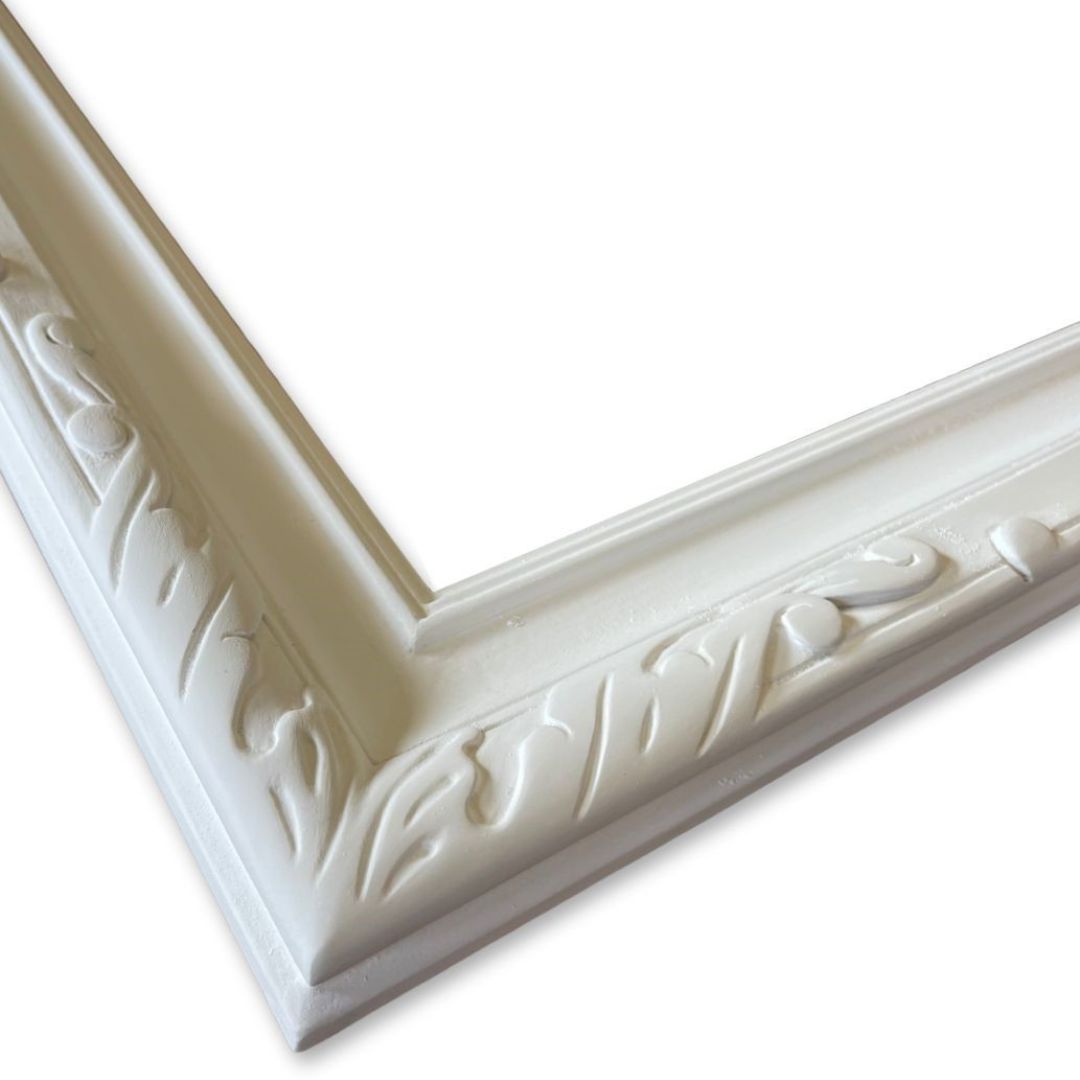
Application of Gesso
Once the surface was prepared, it was time for the application of gesso. We make our gesso using a traditional recipe, which is made with a combination of rabbit skin glue and calcium carbonate. The gesso is applied in multiple layers, with each layer indivually dried and sanded between coats. Sepcial care and attention is paid to ensure that each layer is sanded properly to ensure that there are no issues with the surface futher in the gilding process.
Applicate of Clay Bole
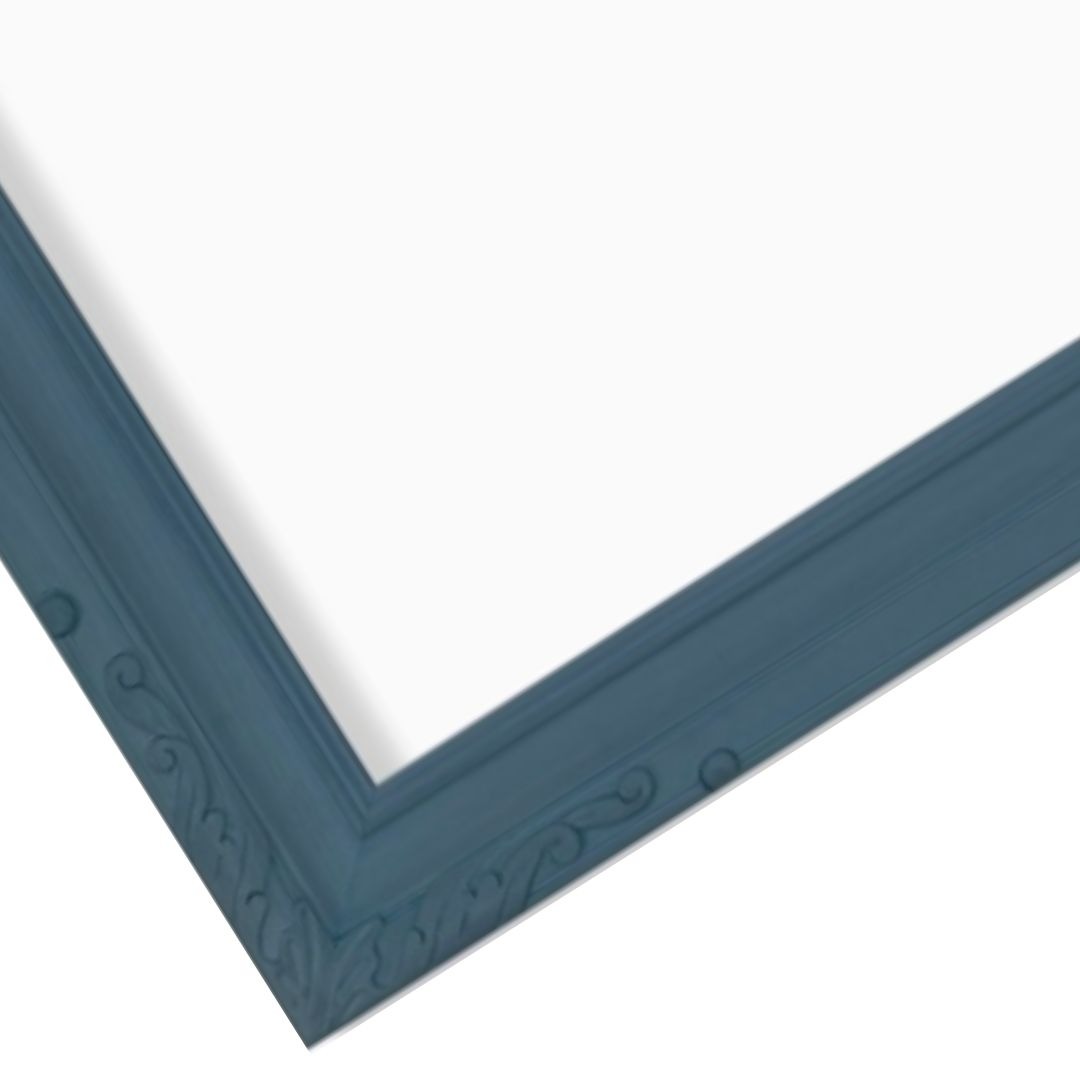
Once the gesso layers have been successfully applied and properly sanded, layers of clay bole are then applied to the prepared surface. As with the gesso, the clay bole is applied in multiple layers, with each layer individually dried and sanded between coats. A custom blue was mixed for this frame to subtly compliment the blue tones present within the portrait painting. It is important that the bole layer is sanded to a silky smooth surface to ensure the perfection of the gold leaf that will be soon applied to the frame.
Water Gilding-The Application of Gold Leaf
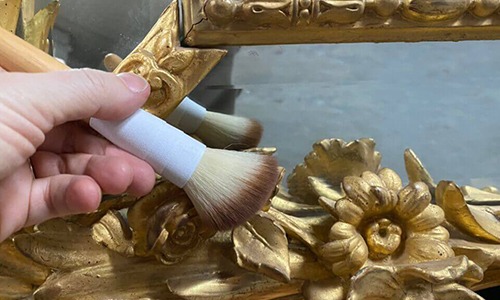
Now that the profile is prepared with gesso and bole, the frame is ready to be water gilded. Using a time-honored, centuries old technique, leaves of authentic gold leaf are hand applied with a gilder’s tip and an electrostatic charge. Each 3 1/8″ x 3 1/8″ sheet of gold leaf is indivually applied, and even layered as needed to provide more opacity to the surface. Once the gold has been applied, the surface is selectively burnished with an agate to acheive a high, reflective sheen. Areas of the frame are then rubbed and abraded to reveal the areas of bole underneath. The revealed areas of bole can emulate historic wear, but also can be used as a design element. In this case, it is both, it softens the appearance of the gold, and the blue in the portrait, is now reflected in the frame. The gilded and rubbed surface was then lightly toned to give more of a presence of age and then sealed with a protective coat of shellac.
The Finished Frame
With the gilded frame complete, the portrait was assembled into the frame. The lip of the frame was lined with volara, the painting was assembled into the profile with a fluted polypropylene backboard. Once assembled, a dustcover was installed on the back. D-rings were secured as the hanging hardware. This beautful, heirloom portrait is now on display with its carefully designed frame. The frame that will protect and display this portrait for generations to enjoy.
If you have questions or if you want to learn how to start a special project, please contact us at info@artifactservices.com
Frequently Asked Questions About Custom Gilded Frames
What is a custom gilded frame?
A custom gilded frame is individually designed and handcrafted for a specific painting, portrait, or work of art. The frame may incorporate hand-carved details, traditional gesso and clay bole preparation, genuine gold leaf, selective burnishing, and custom toning. Unlike a standard ready-made frame, every element can be tailored to complement the artwork’s period, palette, proportions, and visual character.
How is a traditional water-gilded frame made?
Traditional water gilding begins with a custom-milled wood profile that is joined, carved, and carefully sanded. Multiple layers of handmade gesso are then applied and smoothed, followed by layers of clay bole. Genuine gold leaf is laid onto the prepared surface by hand and selectively burnished with an agate stone. The gilding may then be rubbed, toned, and lightly distressed to create depth and an appearance appropriate to the age of the artwork.
Can a new gold-leaf frame be designed to look historically appropriate?
Yes. A newly made gold-leaf frame can be designed to reflect the style, materials, and craftsmanship of the artwork’s period. For this early-1930s portrait by Chicago artist William Carqueville, Artifact created an American Impressionist-style frame with restrained hand-carved corner ornamentation. Carefully rubbed gilding and subtle toning gave the new frame an aged character without making it appear artificially distressed.
How can the color of clay bole complement a painting?
Clay bole is the smooth, colored foundation applied beneath gold leaf in traditional water gilding. Where the gilded surface is selectively rubbed or naturally worn, the bole becomes visible and influences the frame’s overall appearance. For this portrait, a custom blue bole was mixed to echo the painting’s blue background, soften the brilliance of the gold, and visually connect the frame to the artwork.
Where can I have a custom gold-leaf frame made in Chicago?
Artifact Services creates custom gilded frames in Chicago using traditional techniques, including hand carving, gesso preparation, clay bole application, water gilding, burnishing, toning, and conservation-minded assembly. Each frame is developed to complement the artwork while providing an appropriate and protective presentation for heirloom portraits, historic paintings, and fine art.