Original architectural features give historic homes much of their character. When those elements begin to deteriorate, thoughtful restoration can preserve both their beauty and their connection to the building.
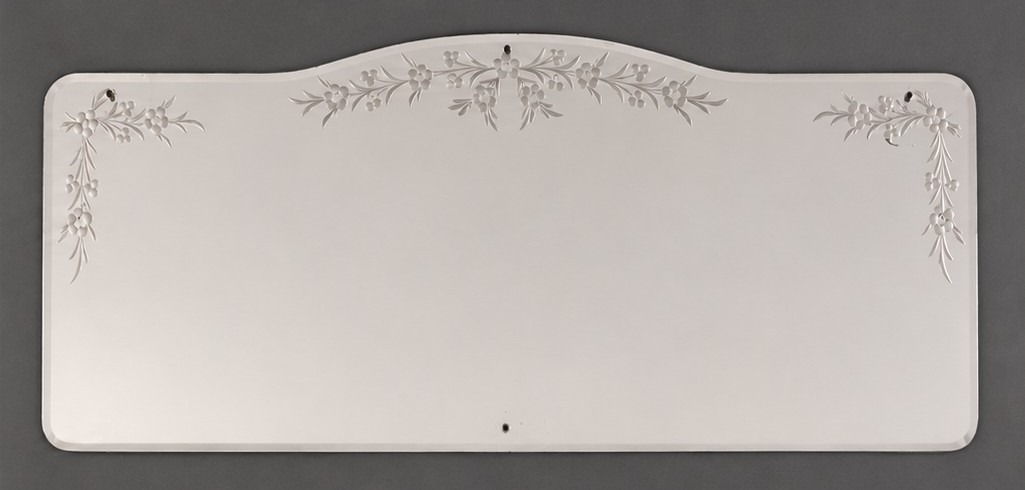
This engraved mirror dates to the 1920s and was originally installed above a built-in sideboard in a Chicago-area bungalow. The shaped glass panel features delicate floral engraving designed to complement the surrounding millwork.
Deterioration of the Original Silvering
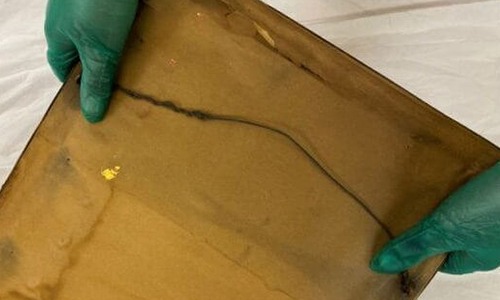
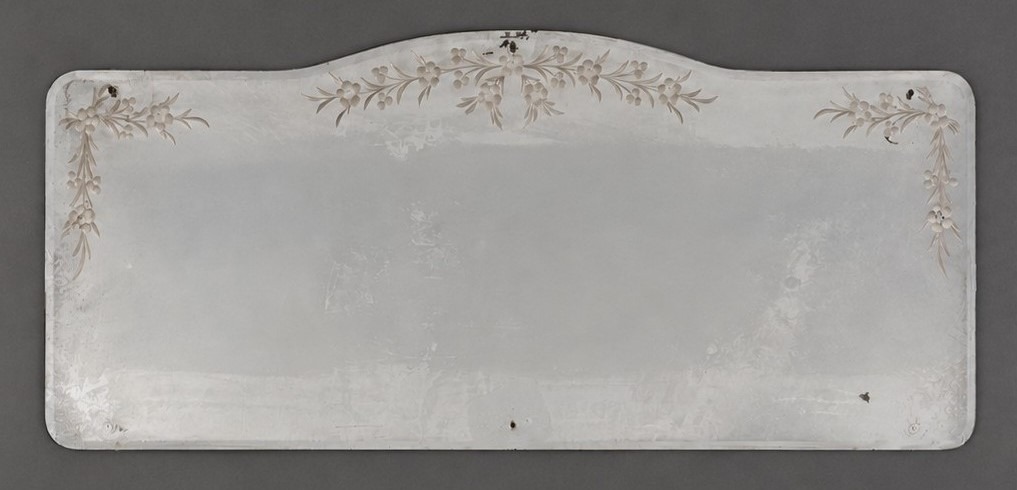
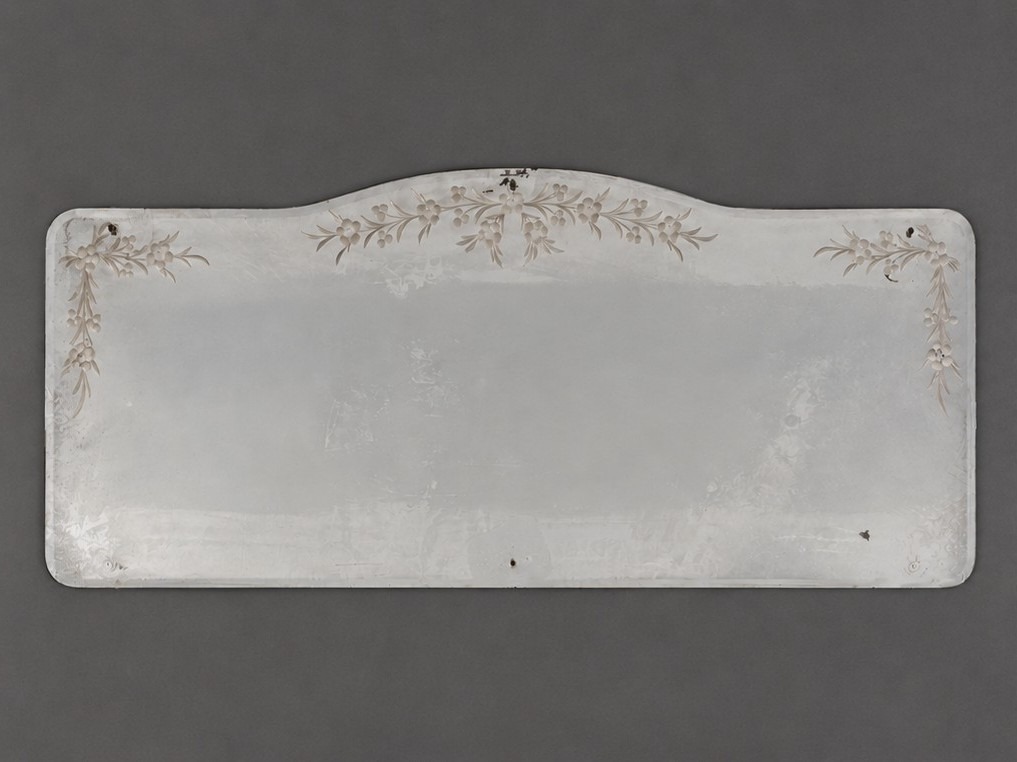
Over time, the mirror’s reflective silvering had become significantly deteriorated and disfiguring. Moisture had penetrated the protective backing along the perimeter of the glass and through the mounting holes. This exposure caused discoloration, delamination, and losses within both the silver layer and its protective coating.
The deterioration was especially pronounced around the mounting holes and edges—areas where moisture can more readily migrate behind the glass.
Although the silvering was compromised, the glass itself remained in good condition. The engraved floral decoration was intact, with only age-appropriate abrasions and surface wear. Because the original glass and engraving could be preserved, resilvering offered an appropriate alternative to replacing the historic mirror.
Resilvering the Original Glass
The glass was first carefully surface cleaned. The deteriorated silvering and protective backing were then stripped from the reverse of the panel.
Once the compromised coatings had been removed, the glass was thoroughly cleansed to eliminate residues and contaminants that could interfere with the adhesion and appearance of the new reflective layer. Careful preparation is essential: even minute traces of oil, oxidation, or cleaning residue can affect the final silvered surface.
A new reflective silver layer was then applied to the reverse of the original glass. After the silver had cured, multiple layers of a painted protective backing were applied to help isolate the new silvering from moisture, pollutants, and abrasion.
Throughout the process, the original shaped glass, beveled edges, mounting holes, and engraved floral decoration were retained.
Preserving an Original Architectural Feature
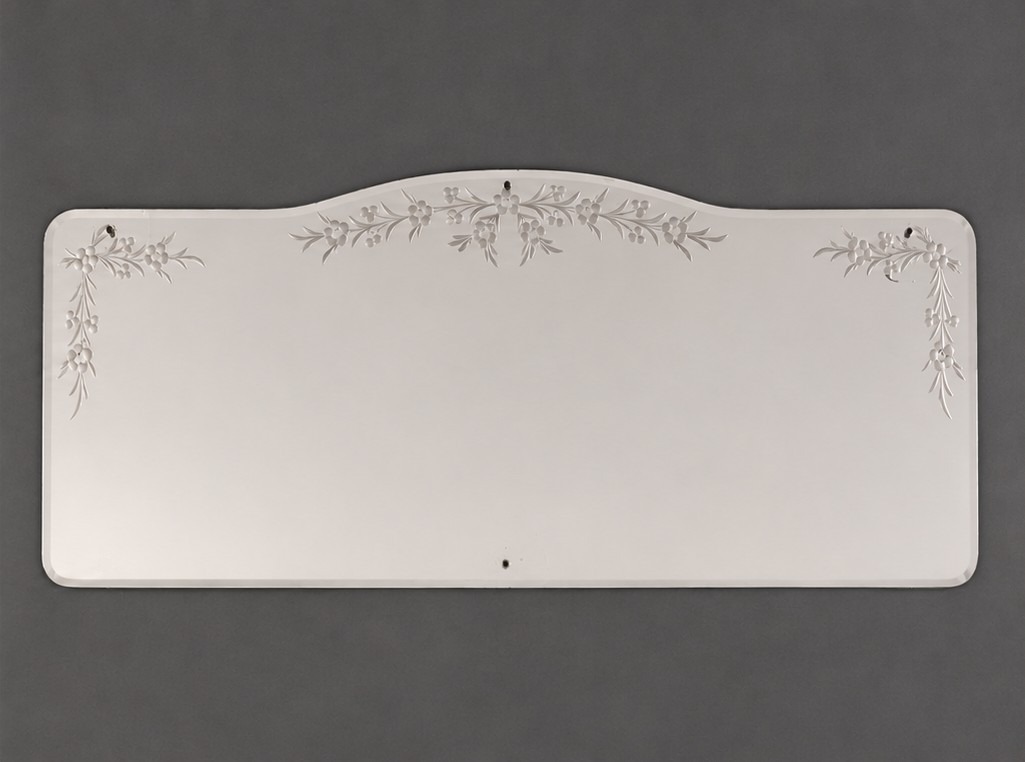
The completed treatment restored a clear, even reflection while preserving the subtle wear and character of the nearly century-old glass. Resilvering allowed the mirror to remain part of the bungalow’s original built-in sideboard rather than replacing it with newly manufactured glass.
Historic mirrors are often valued for more than their reflective surfaces. Their shapes, engraving, bevels, and relationship to the surrounding architecture make them integral parts of an interior. When the glass remains sound, professional resilvering can restore function and appearance while preserving the original material.
BEFORE
AFTER
Artifact Services provides conservation and restoration services for antique mirrors, engraved and beveled glass, decorative objects, furniture, frames, and other historic interior elements in the Chicago area.
To discuss the restoration of an antique or architecturally integrated mirror, contact us at info@artifactservices.com
When should an antique mirror be resilvered?
Resilvering may be appropriate when the reflective backing has become extensively cloudy, darkened, spotted, or deteriorated, particularly when the damage interferes with the mirror’s appearance or function. The decision should balance improved reflectivity with the preservation of desirable age, character, and patina.
Can an engraved antique mirror be resilvered without damaging the decoration?
In many cases, yes. Engraved decoration is typically worked into the glass itself, while the reflective silver layer is applied to the reverse. The mirror must be carefully assessed beforehand to determine whether the glass, engraving, bevels, and edges can safely withstand the stripping and resilvering process.
What causes silvering to deteriorate around the edges and screw holes?
Moisture and contaminants can reach the reflective layer through vulnerable areas in its protective backing. Edges, mounting holes, scratches, and points of contact with hardware are particularly susceptible. Over time, oxidation and deterioration may produce dark spots, cloudiness, or losses in reflectivity.
Will a resilvered antique mirror look completely new?
Resilvering renews the reflective backing but does not replace the original glass. Historic characteristics such as minor scratches, waviness, bubbles, engraved decoration, beveled edges, and other evidence of age, will remain visible. When combined with the new silvering, the glass’s historic damage may become more prominent. The result is improved reflectivity while retaining the antique glass’s distinctive character.