At Artifact, we’re proud to help collectors and film enthusiasts preserve and showcase their most treasured cinematic memorabilia. A recent project involved the treatment and linen backing of a rare Wizard of Oz original movie poster, issued during the 1970s re-release of the film in Australia. This colorful one sheet had been stored folded, and the client wanted to minimize the fold lines for display while keeping the piece archivally safe and fully reversible.
The Poster: The Wizard of Oz, 1970s Australian Re-Release
While the original 1939 release of The Wizard of Oz is the most iconic, this 1970s reissue poster is highly collectible in its own right, particularly for its vibrant graphics and international provenance. Australian one-sheets from this period are especially sought after due to their limited print runs and regional design variations.
Condition on Arrival
The poster arrived folded as was common for movie posters of that era, with visible creases across the sheet. Though there were no major tears or stains, however, the creasing from the folds were distracting and made framing and long-term preservation a challenge. To address this, the client requested linen backing, a process that would flatten the poster while maintaining its value and integrity as an original movie poster.
The Linen Backing Process
We began by humidifying the poster in a controlled environment to gently relax the fibers and reduce tension at the fold lines. Once relaxed, the poster was mounted using a reversible method: first onto acid-free conservation paper, then onto a cotton duck canvas backing using traditional wheat paste adhesive. This method, known as linen backing or canvas backing, is the standard in archival mounting for vintage movie posters.
Not only does linen backing reduce the appearance of fold lines and allow for safe handling, but it also provides a stable surface for framing and display. Importantly, the entire process is reversible.
Why Poster Collectors Choose Linen Backing
Final Results
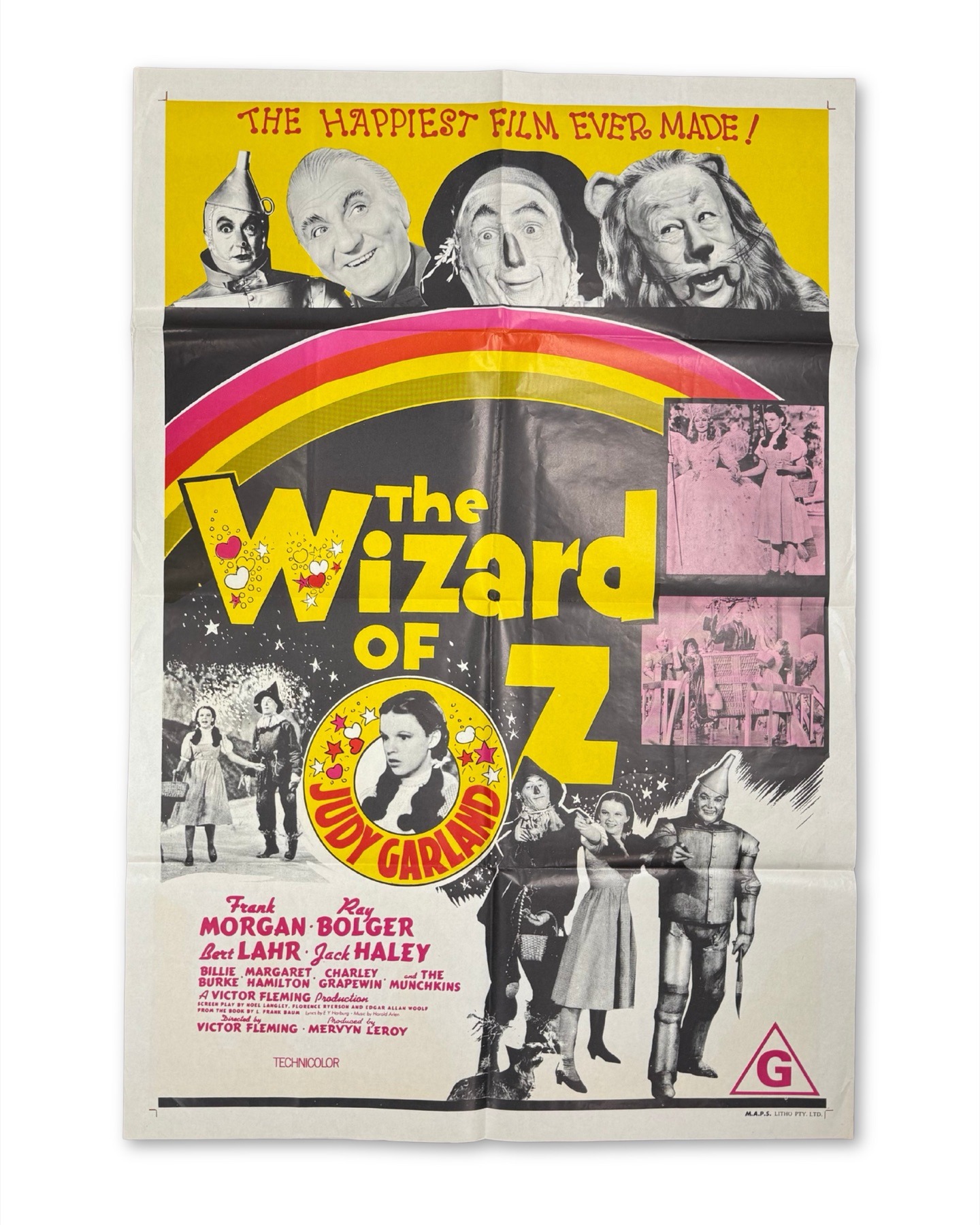
BEFORE
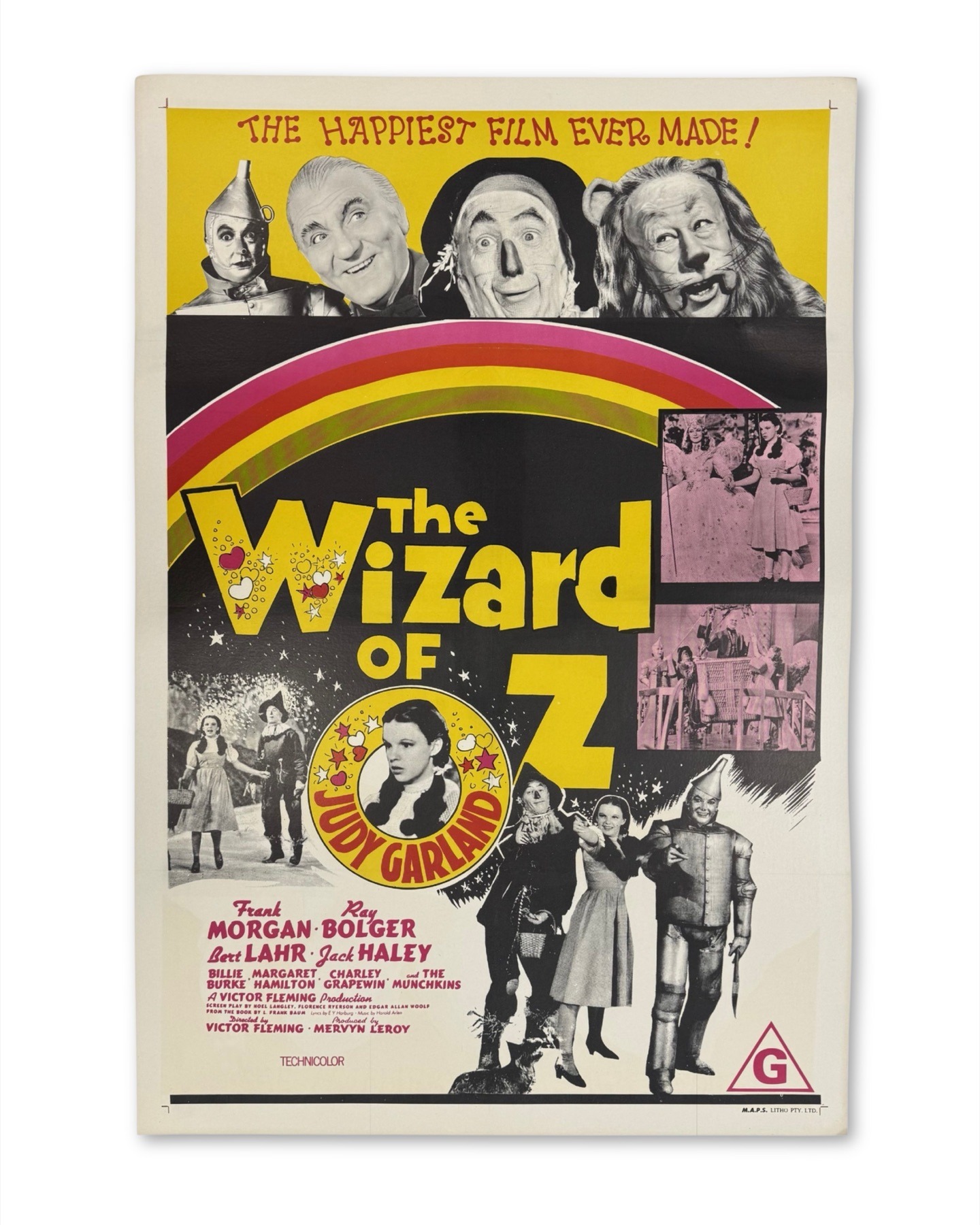
AFTER
This vibrant Wizard of Oz poster now lies flat, with its fold lines greatly diminished and its surface protected for long-term enjoyment. Whether displayed in a personal collection, home theater, or gallery wall, it now commands the attention it deserves.
If you have a vintage or original movie poster and are interested in linen backing, canvas backing, or reversible archival mounting, contact us to learn more.
312-344-0331
info@artifactservices.com
What is linen backing for a vintage movie poster?
Linen backing is a conservation mounting process used to stabilize and support vintage movie posters. The poster is carefully relaxed and mounted onto acid-free conservation paper and a cotton canvas backing using a reversible wheat-starch paste. This provides additional support, reduces the appearance of fold lines and creates a stable surface for handling, framing and display.
Can linen backing remove fold lines from an original movie poster?
Linen backing can significantly reduce the appearance of fold lines, creases and minor distortions, although some evidence of the poster’s history may remain. The objective is not necessarily to make a vintage poster appear new, but to improve its stability and presentation while preserving its original printed surface and historic character.
How should a linen-backed movie poster be framed and displayed?
A linen-backed poster should be framed using conservation-grade materials and UV-filtering glazing, such as conservation glass or museum acrylic. The poster should be kept away from direct sunlight, excessive humidity and significant temperature fluctuations. Proper framing protects the poster while allowing it to be displayed without permanently mounting it to a rigid board.
Is linen backing reversible and safe for collectible posters?
When properly performed with conservation-grade materials, linen backing is designed to be reversible by a qualified paper conservator. The poster is not permanently adhered to a rigid support, and the backing can generally be removed through a controlled conservation process. This makes linen backing a preferred mounting method for many rare and collectible movie posters.