Fu Manchu was not only a fictional literary villain, it was also the stage name used by the celebrated British-born magician and illusionist David Bamberg (1904–1974) in the early to mid 20th century. The last member of a multigenerational family of magicians, Bamberg developed an elaborate touring production known for its combination of illusion, comedy, color and theatrical spectacle. He became particularly renowned throughout Latin America, where he began performing as Fu Manchu in the late 1920s.
This original full-color lithograph was created around 1940 to promote Bamberg’s performances. Printed by Fenix in Argentina, the dramatic composition portrays the magician in costume, encircled by a brilliantly colored dragon as a mysterious female figure looks on. Its strong typography, stylized forms and saturated palette capture the exoticized theatrical imagery used to promote stage magic during the period.
An Archival Frame with a Sense of Theater
The poster arrived already properly linen-backed, providing additional stability for the vintage sheet. Our framing design focused on protecting the lithograph while extending the visual drama of the original composition.
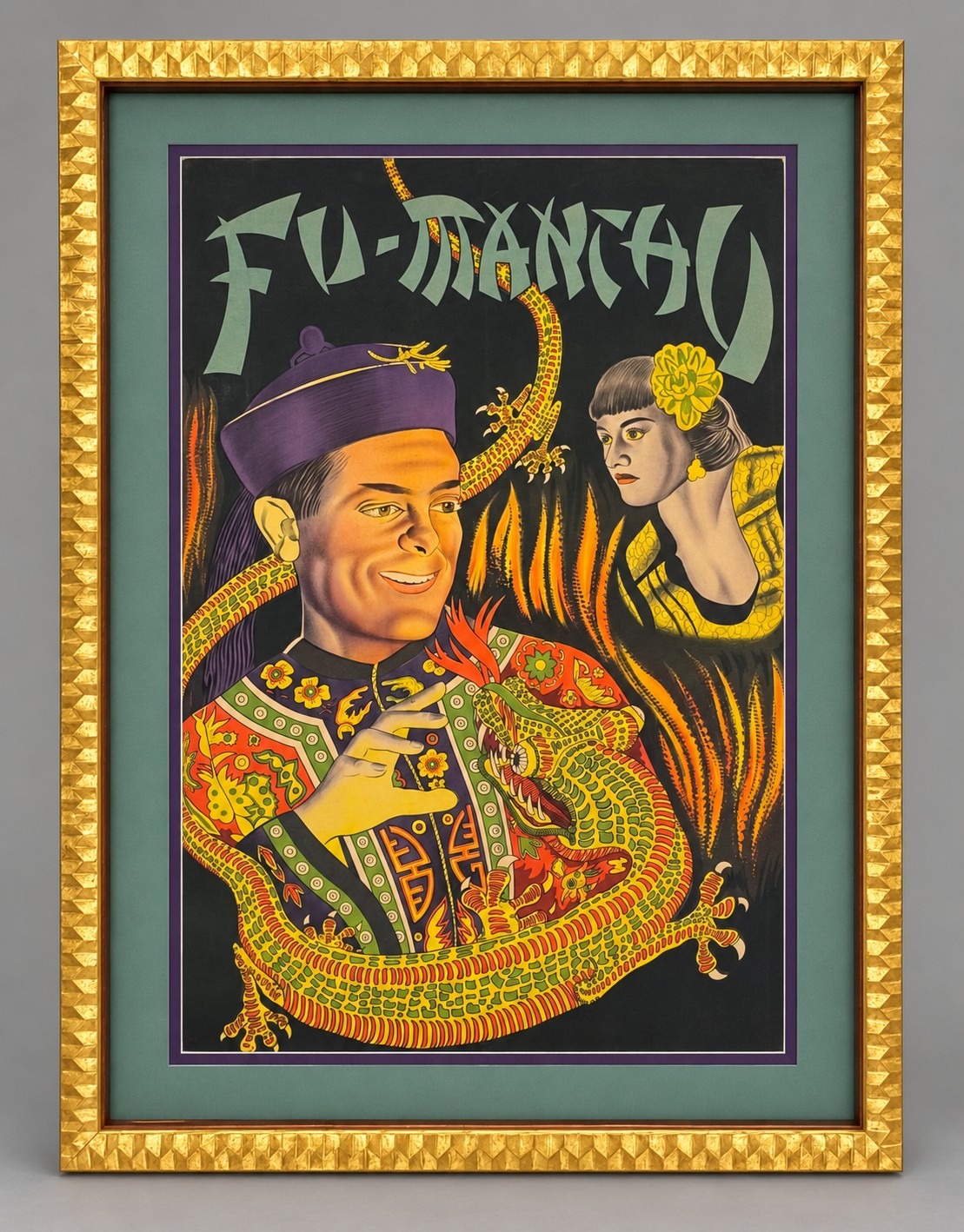
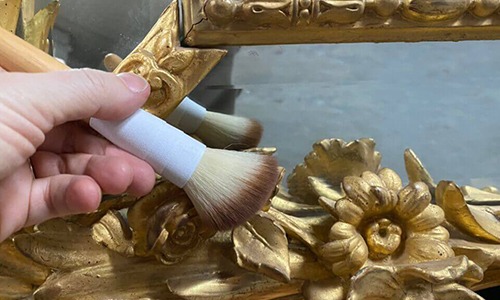
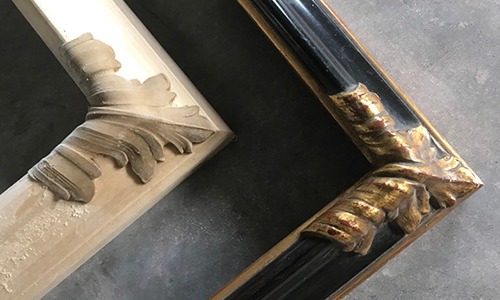
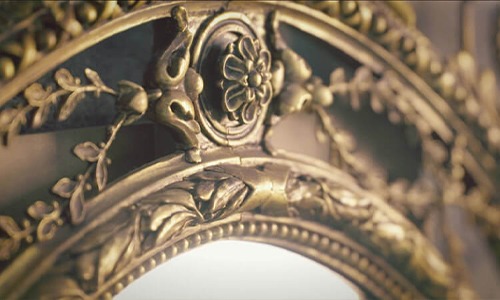
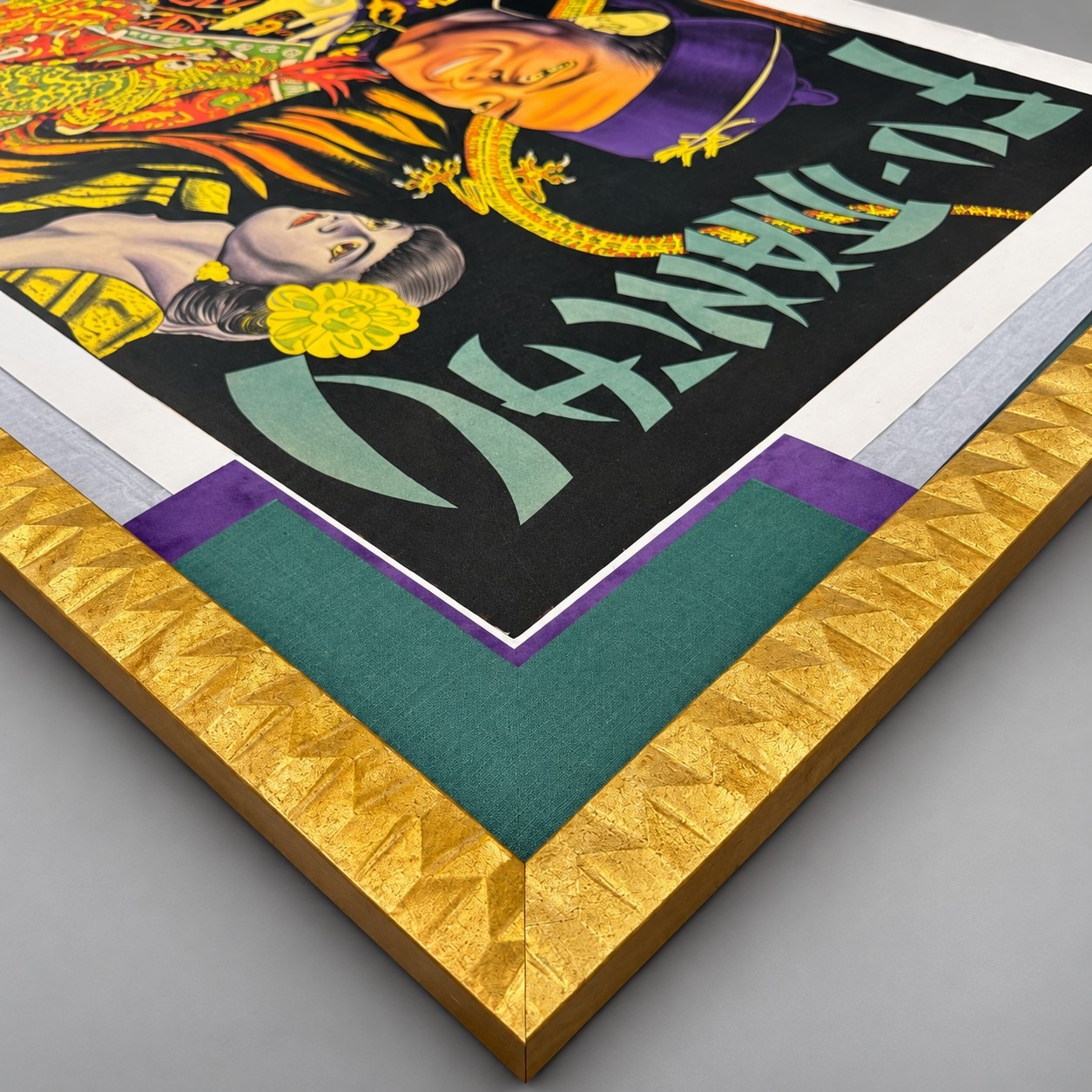
An Art Deco–inspired gilded frame was selected for its sculptural geometric pattern, which echoes the angular typography and decorative motifs within the image. A hand-wrapped green silk mat draws from the poster’s muted green tones, while a narrower purple suede inner mat complements the magician’s costume. The contrast between silk, suede and gilded frame design creates a richly layered, theatrical presentation—one that feels appropriately dramatic without competing with the artwork.
The linen-backed poster was secured using archival hinges and glazed with Museum Glass. Museum Glass provides exceptional clarity while reducing reflections and filtering harmful ultraviolet light.
The completed framing allows the poster’s vivid color and historic character to take center stage, while the combination of pattern, color and tactile materials evokes the spectacle of seeing Fu Manchu beneath the theater lights.
Do you have an original poster, print or work on paper that you would like to preserve and display? Contact Artifact Services to schedule a framing consultation. We work with collectors, designers, galleries and institutions on custom archival framing projects in Chicago and beyond.
Frequently Asked Questions About Archival Framing
What makes framing "archival"?
Archival framing uses stable, conservation-quality materials and reversible techniques intended to protect an artwork rather than permanently alter it. Depending on the piece, this may include acid-free or museum-grade matboard, archival hinges, appropriate backing materials, protective glazing and sufficient separation between the artwork and glazing.
How do you choose mat colors and textures for a vintage poster?
We consider the poster’s palette, period, typography, visual weight and intended surroundings. For this Fu Manchu lithograph, green silk and purple suede were selected to complement colors within the image. Their contrasting textures also give the finished presentation a layered, theatrical quality. Custom fabric-wrapped mats provide options beyond standard paper matboard and can help create a more distinctive design.
Is Museum Glass worth using for an original poster?
Museum Glass is an excellent choice for valuable or visually detailed works on paper. It reduces distracting reflections, offers exceptional clarity and filters harmful ultraviolet light that can contribute to fading and deterioration. While no glazing eliminates every environmental risk, Museum Glass provides meaningful protection without compromising the viewing experience.
Can a decorative frame still meet archival standards?
Absolutely. Preservation and design do not need to compete. The visible frame can be ornate, gilded, contemporary or period-inspired, while the materials and methods inside the frame provide archival support. Our goal is to create a presentation that responds to the artwork aesthetically while addressing its physical condition and long-term preservation needs.