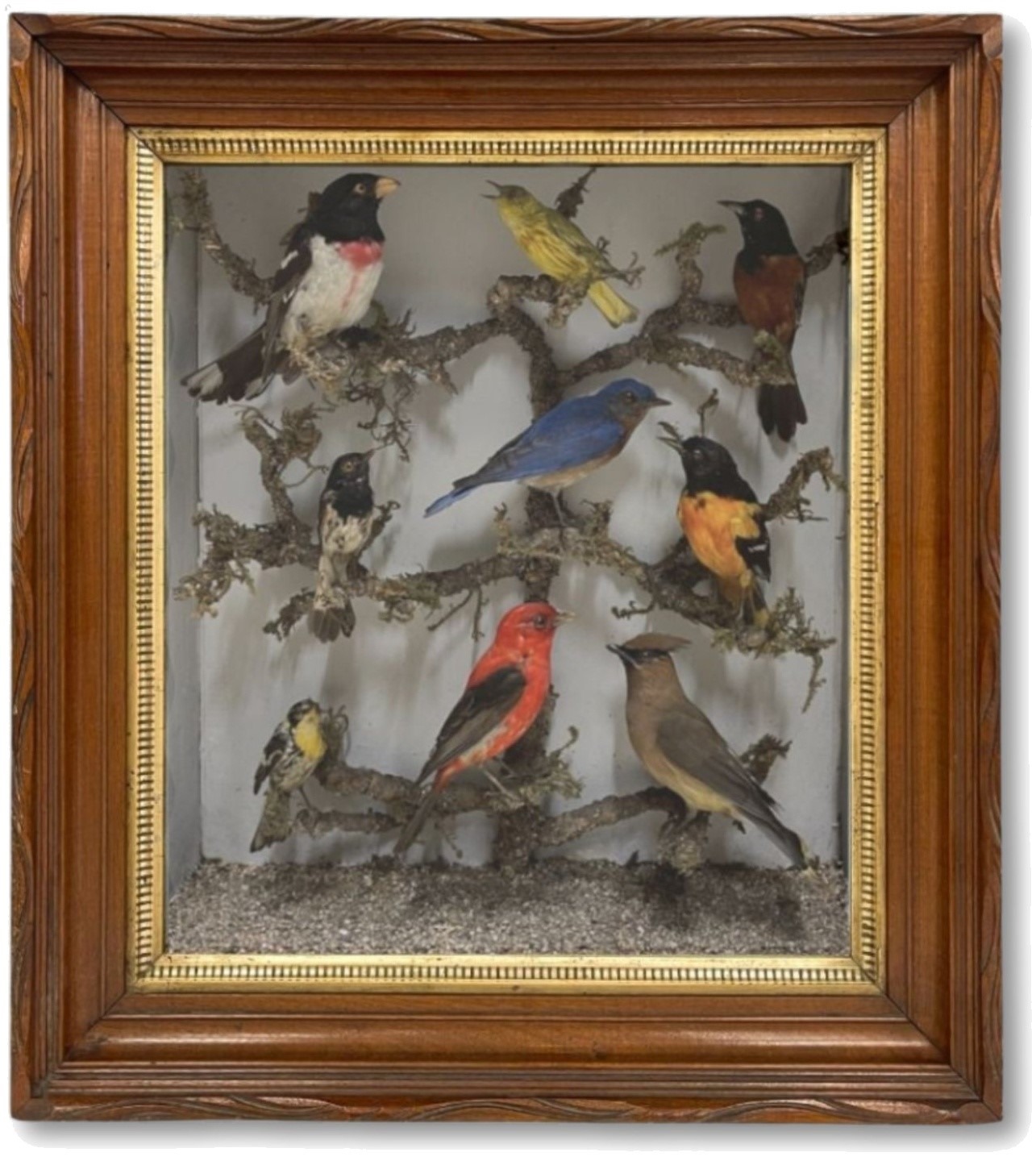
At Artifact, our work often brings us face-to-face with rare and unusual objects that reflect the artistry and curiosity of past eras. A recent conservation project involved a Victorian-era taxidermy aviary shadowbox—an elaborate and historically rich example of natural history display that required careful frame repair, restoration, and conservation of both the housing and the specimens inside.
Historical Context
Taxidermy became a widespread cultural phenomenon during the Victorian and turn-of-the-century periods. Fueled by the era’s fascination with science, exploration, and the natural world, intricately arranged bird and animal displays were crafted for both museum collections and fashionable domestic interiors. Shadowboxes—often front-opening glass enclosures—were a favored format, offering a protected yet intimate view into a curated slice of nature. These tableaux served not only as decorative conversation pieces, but also as educational tools that reflected contemporary interests in biology, colonial expansion, and the classification of the natural world.
Condition on Arrival
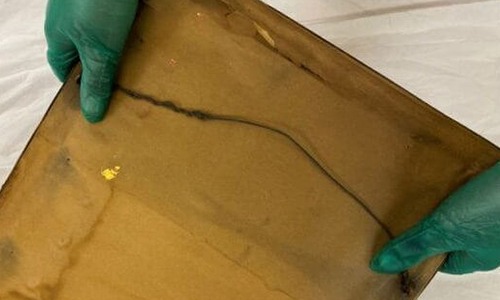
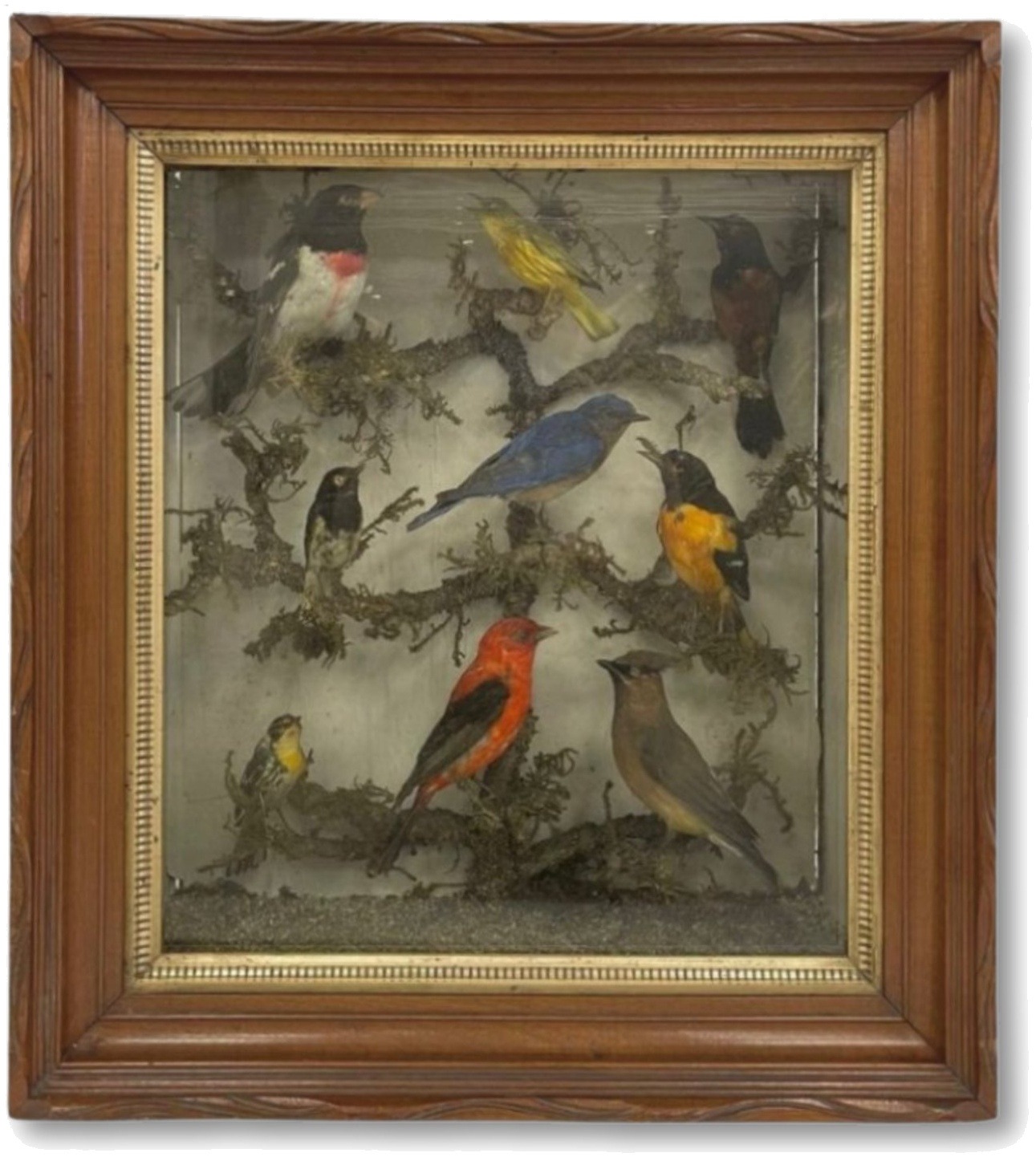
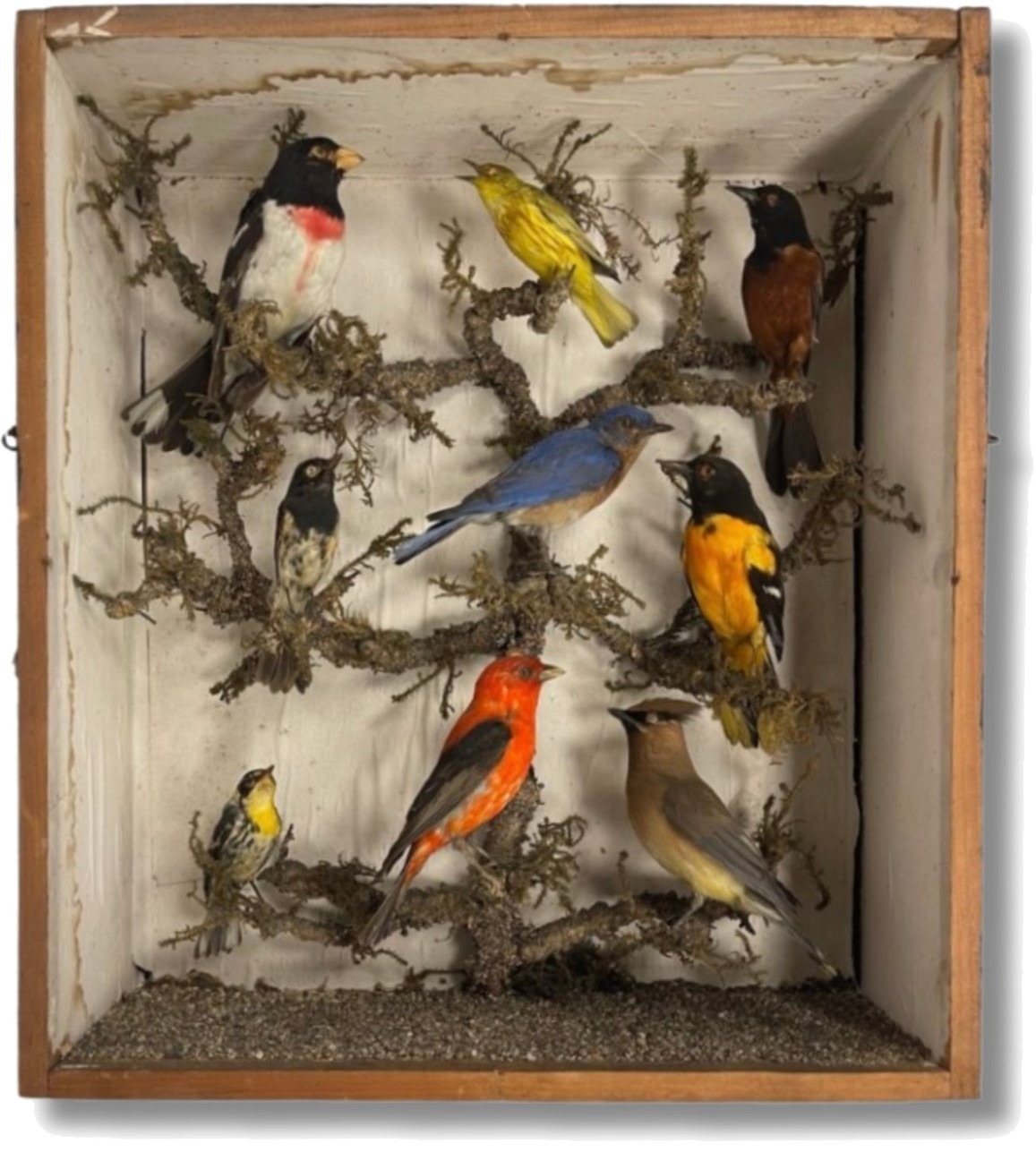
This particular shadowbox, dating from the late 19th to early 20th century, arrived at our studio with significant water damage. There was delamination of the backing, and the back panel had begun pulling away from the frame verso, compromising both the visual integrity and physical stability of the object. The finish on the frame was desiccated and showed signs of wear and age. Inside, a few of the bird specimens were missing glass eyes, and some were loose from their mounts. The eyes were not present within the housing, and the background panel exhibited staining and distortion due to exposure from moisture.
Conservation Treatment
The conservation process focused on the preservation of the taxidermy, the stabilization and cleaning of the interior scene, and the repair and restoration of the frame structure itself.
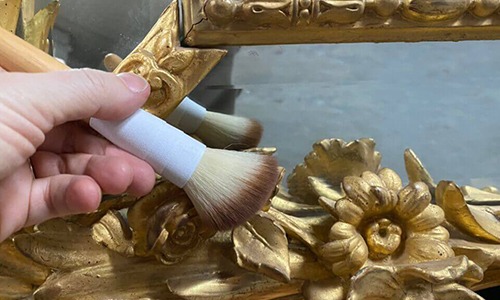
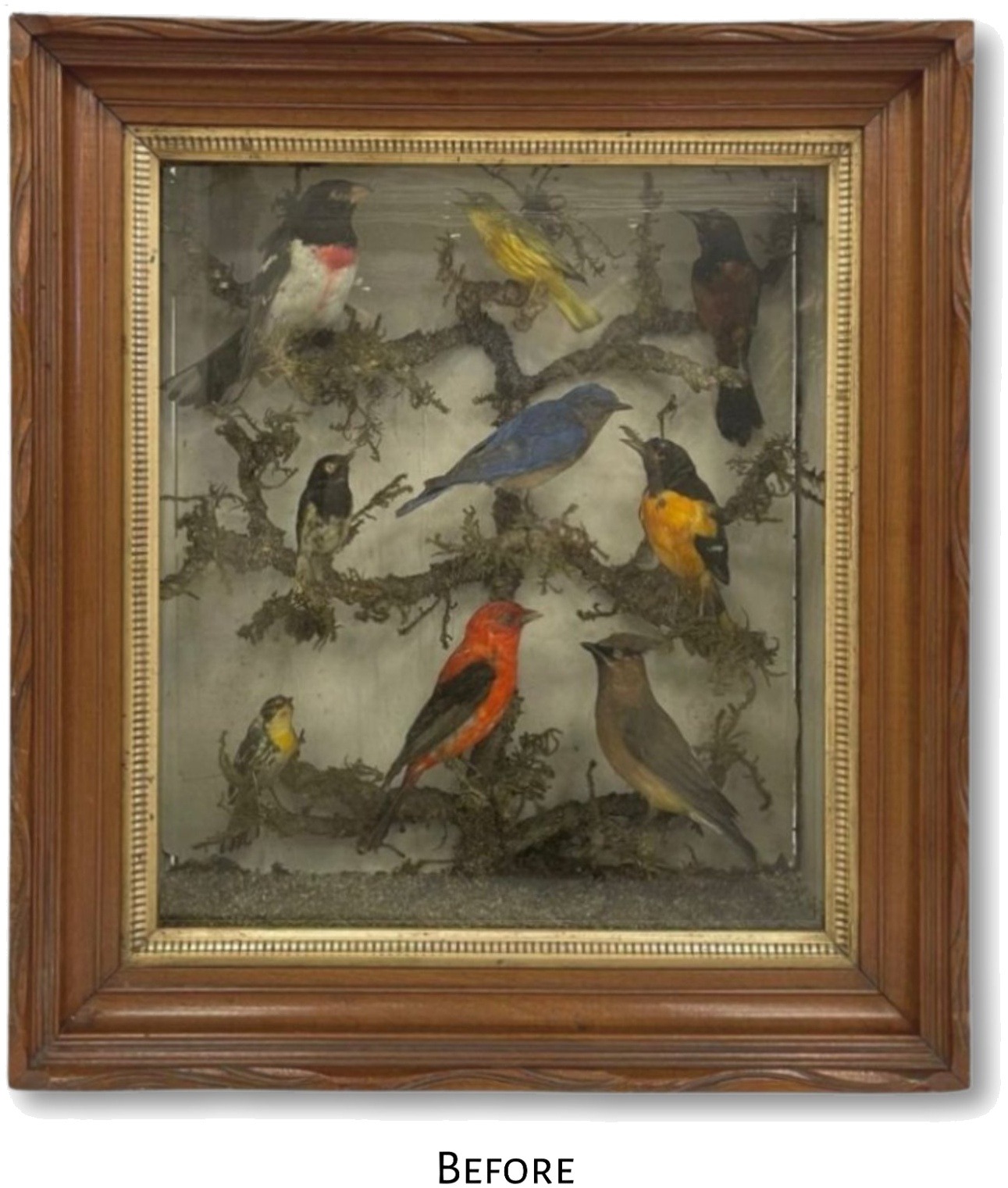
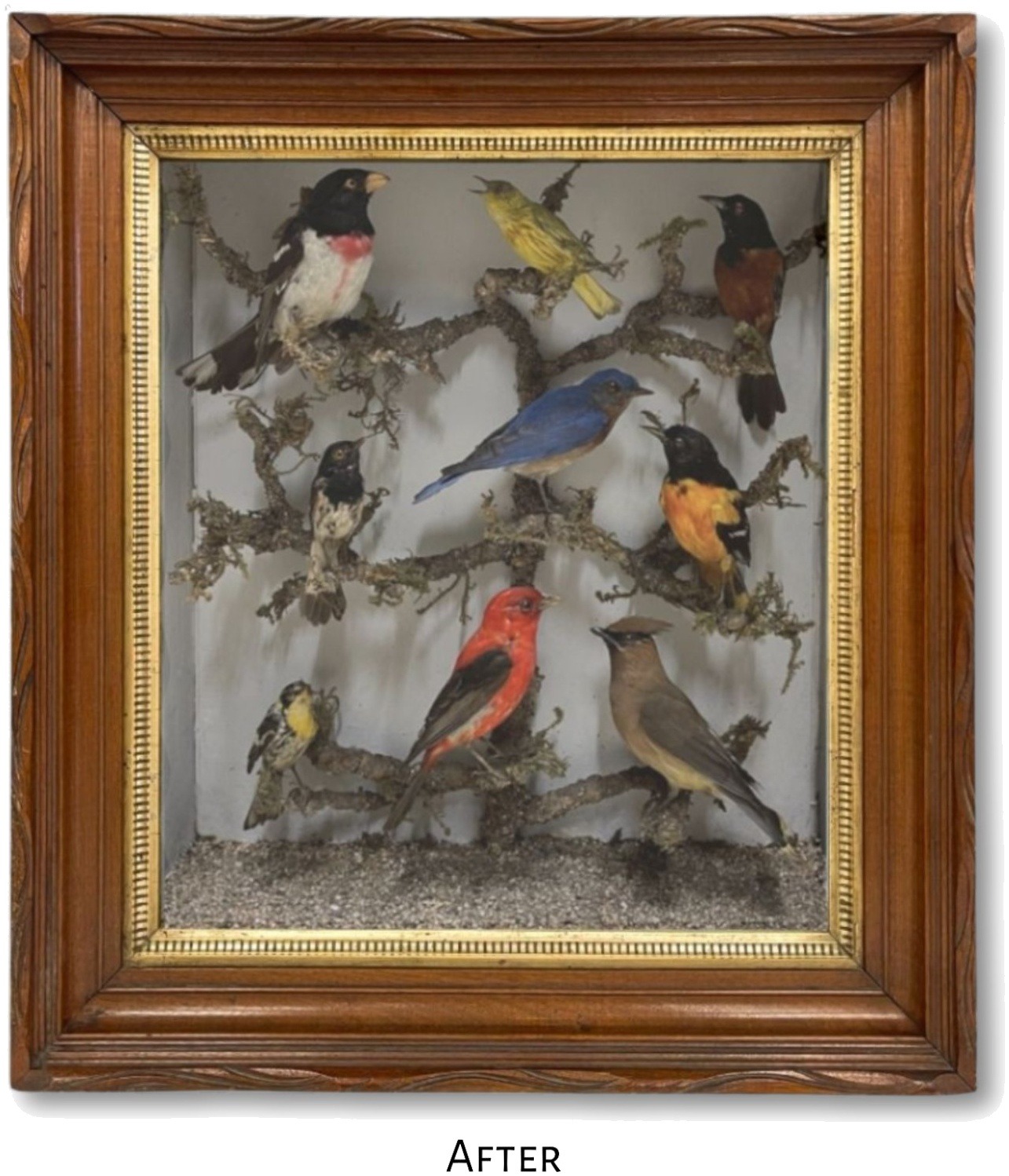
We began by cleaning the frame and liner, removing accumulated dirt and grime. The wooden elements of the frame were waxed and hand-buffed to revive their natural luster, while the gilt liner was carefully stabilized and minimally retouched, improving the condition while retaining it’s historic wear.
Inside the shadowbox, the bird specimens were gently cleaned to remove surface dust. After researching appropriate replacements, comparable vintage-style glass eyes were sourced and installed where the originals were missing. Specimens that had detached from their mounts were safely re-secured using appropriate conservation techniques, ensuring both stability and reversibility.
The compromised back panel—which had begun separating from the structure—was addressed next. Areas of delamination were carefully seated and flattened, and the staining in the background was retouched and visually integrated to minimize distractions without altering the historic surface. Finally, the back panel was reattached to the verso and sealed, reinforcing the structure for future stability. The frame was then reassembled with the shadowbox, completing the treatment.
A Balanced Approach to Restoration and Conservation
This project required a sensitive and well-rounded approach, balancing the needs of frame repair and aesthetic restoration with the principles of preservation and conservation. The result is a stabilized, beautifully refreshed shadowbox that retains the integrity of its historical materials while once again showcasing the delicate wonder of its taxidermy scene
If you have questions about the restoration, conservation, or framing of historic shadowboxes, taxidermy, or other decorative objects, please contact us.
312-344-0331
info@artifactservices.com
Can a Victorian taxidermy bird shadowbox be restored?
Yes. A Victorian taxidermy bird shadowbox can often be conserved and stabilized, even when it has water damage, loose specimens, missing glass eyes, a deteriorated backing, or a damaged frame. Treatment may include carefully cleaning the taxidermy and interior, re-securing detached elements, repairing the enclosure, and minimally retouching visually distracting damage while preserving the object’s historic character.
How is water damage treated in an antique aviary shadowbox?
Treatment depends on the materials affected and the extent of the moisture exposure. Delaminated backing materials may be carefully flattened and secured, while staining and distortion can sometimes be reduced or visually integrated. The enclosure should also be stabilized and sealed appropriately to protect the fragile taxidermy specimens and interior elements from further damage.
Can missing glass eyes in antique taxidermy birds be replaced?
Yes. When original glass eyes are missing, conservators can research and source comparable vintage style replacements that are appropriate in size, color, shape, and appearance. The goal is to restore visual continuity without making the specimens look artificially new or misrepresenting the historic object.
How are loose bird specimens repaired inside a Victorian shadowbox?
Loose or detached taxidermy birds can be carefully repositioned and secured to their original mounts using stable, conservation appropriate methods. Whenever possible, the attachment technique is designed to be minimally invasive and reversible. Fragile feathers, feet, wires, botanical materials, and surrounding decorative elements must be protected throughout treatment.
Should an antique taxidermy shadowbox retain signs of age after restoration?
Yes. Conservation is generally intended to stabilize the object and improve its presentation and to not erase every indication of age. Historic wear, mellowed finishes, minor surface variations, and other evidence of the shadowbox’s history may be retained when they do not threaten its stability. Selective cleaning, waxing, stabilization, and minimal retouching can improve the appearance while preserving the authentic Victorian character of the piece.